
Trends in job quality
European Working Conditions Survey 2024
First Findings




Introduction
The European Working Conditions Survey (EWCS) first findings provide an early insight into the latest data on job quality in the EU.
Eurofound has been monitoring the development of job quality since the first round of the EWCS in 1990. Over the last thirty-five years, Eurofound has tracked the ever-evolving concept of job quality. While earlier approaches emphasised wages, working time, and health and safety, over time the scope expanded to include aspects such as autonomy, work intensity, skills use and psychosocial risks.
As a result of this research, today Eurofound can provide important insights into key aspects of job quality, including trends over time, that serve to shape EU policies such as the Competitiveness Compass and the Quality Jobs Roadmap.
The 2024 EWCS reveals the latest trends in job quality based on the seven dimensions of the job quality framework.
- Physical environment
- Social environment
- Working time quality
- Work intensity
- Skills and discretion
- Prospects
- Earnings
Each dimension is measured by a specific index. The job quality framework offers invaluable insight into working conditions in Europe and underscores the fact that job quality is multidimensional: it is not just one aspect that makes a job a good job.
This EWCS first findings digital story provides an overview of the initial analysis of the EWCS 2024 data. For more detailed information:
Job quality is multidimensional:
it is not just one aspect that makes a job a good job
Physical environment

Key findings
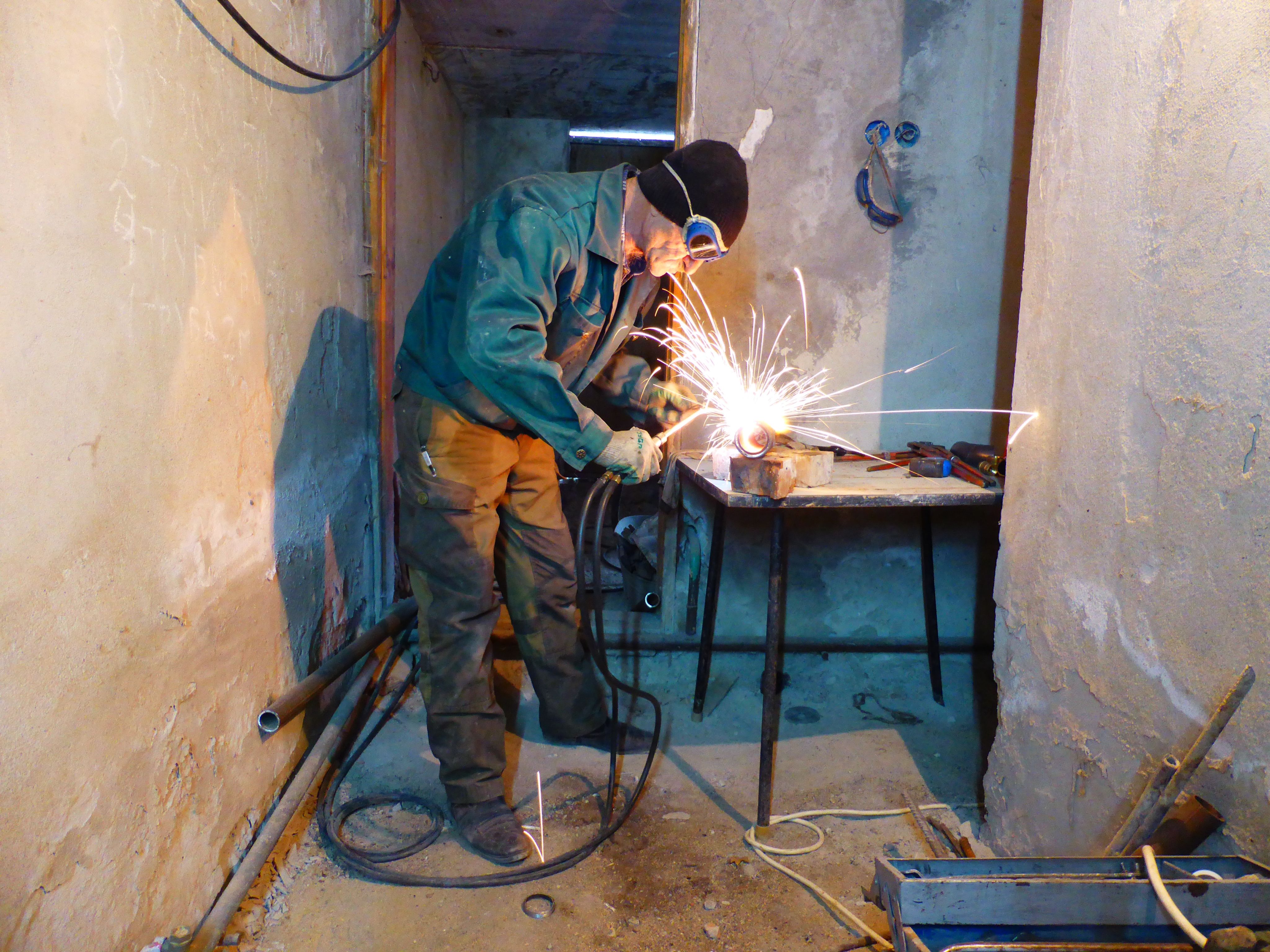
Overall trend: The quality of the physical work environment has been improving since 2010 for both men and women. The rate of improvement has been faster for men.
Specific risks: The general improvement is due to a reduction in most physical risks. However, exposure to high temperatures and chemical contact has increased.
Gender differences in exposure: Men are more exposed to risks like vibrations, noise and heavy loads, while women are more exposed to lifting people, sedentary sitting and infectious diseases. Both men and women report similar exposure to tiring or painful positions.
Occupational hazards: Workers in specific fields like crafts, agriculture and machine operation face a higher accumulation of multiple physical risks.
High temperatures: Episodic exposure to high temperatures (25 %–75 % of the time) has increased, potentially due to climate change. Men are more exposed to this than women (34 % versus 18 %). Workers in agriculture, construction and industry are most affected.
Prolonged sitting: A significant portion of workers, particularly women (42 % versus 39 % of men), report sitting for long periods. This is linked to the digitalisation of work.
Progress over time
Physical environment quality has been slowly improving since 2010 for both men and women (Figure 1). The quality of the physical environment remains higher for women than for men, but the gender gap has decreased from 6 points down to 4.8, acknowledging faster progress for men than for women in this dimension.
The improvement is due to a reduction in exposure to most physical risks and demands for which trends are available. The exceptions are exposure to high temperatures and handling or being in skin contact with chemical products or substances, which have increased.
Differences in exposure to physical risks and demands
Exposure to physical risks is related to specific conditions in different activities in the economy and occur in the context of gender-segregated occupations.
- Men are most exposed to vibrations, chemicals, noise, high and low temperatures, carrying and moving heavy loads, breathing in smoke, breathing in solvents and repetitive arm movements.
- Women are most exposed to lifting or moving people, sedentary sitting and infectious diseases.
Men and women report similar levels of exposure to tiring or painful positions. The figure below shows the breakdown of physical risks and demands.
Exposure to multiple physical risks and demands is likely to increase the negative impact on health. In this context, the situation of craft workers, skilled agricultural workers, and plant and machine operators is of particular concern, as they accumulate exposure to most physical risks and physical demands.
- Service and sales workers report higher exposure to high temperatures, painful positions, carrying and moving heavy loads, and repetitive movements.
- Technicians, professionals (e.g. scientists, doctors, teachers), clerks and managers are most exposed to sedentary sitting.
Work in high temperature
Workers’ exposure to ‘high temperatures which make you perspire even when not working’, has been captured in the EWCS since 1995. Exposure to high temperatures all or more than three quarters of the time has remained stable. This applies to people who are working in a very hot environment, for example in a foundry or kitchen. However, episodic exposure (between one quarter and three quarters of the time) has increased. In 2024, 34 % of men and 18 % of women reported exposure to high temperatures at least a quarter of the time. The increase could point to the effects of climate change.
When looking at sectors, workers in agriculture (68 %), construction (52 %), industry and transport (both 33 %) report above average exposure to high temperatures a quarter or more of the time. Many of these workers are working outdoors.
Exposure to high temperatures intensifies the risk of heat stress and of work accidents caused by fatigue and reduced vigilance (Eurofound, 2024). The negative impact of high temperatures on health increases with age and for those with chronic disease.
The increase in exposure to high temperatures
could point to the effects of climate change.
Sitting for long periods
Many workers find themselves sitting at their desks and workstations for prolonged periods of time, mainly due to the digitalisation of work processes and increased computer use. Some 42 % of women and 39 % of men report sitting for periods of at least 30 minutes for three quarters of their working time (Figure 5).
A look at exposure to prolonged sitting by sector shows stark differences between men and women in some sectors.
This confirms that men and women often hold different functions within the same industry leading to different exposure to physical risks in the same sector, with construction being the most extreme example.
Social environment


Key findings
Overall trend: social environments improved marginally between 2010 and 2015 and have remained stable since. However, the gender gap has widened in this period, with women's ‘Social environment index’ scores consistently lower than men’s, due mainly to a greater exposure to adverse social behaviour.
The prevalence of most adverse social behaviour remains low and stable, but verbal abuse and humiliating behaviours are persistent concerns.
Women are more likely than men to experience most forms of adverse social behaviour, with the exception of physical violence and threats, where there is no gender difference.
Exposure to adverse social behaviour is higher in the public sector (public administration, health and education), probably due to frequent interaction with the public.
Direct and frequent interaction with the public (customers, patients, pupils) increases the likelihood of experiencing adverse social behaviours, particularly verbal abuse, threats and physical violence
Social support is generally high. Colleagues provide more support than managers, with 73 % of employees reporting support from colleagues versus 64 % (of men) and 65 % (of women) from managers.
The transport sector shows the highest proportion of workers who report rarely or never receiving support. This lack of support may worsen the effects of high job demands in this sector.
Progress over time
The social environment index score increased by only one point between 2010 and 2015; it subsequently remained stable through 2024 (Figure 6). The existing gender gap increased between 2015 and 2024, with women's scores consistently lower than men's, primarily due to their greater exposure to adverse social behaviour.
Adverse social behaviour
Adverse social behaviour in the workplace affects the quality of the social climate, with well-documented negative consequences for both individuals and organisations. In each edition of the survey, the EWCS asks workers about their experiences with various forms of adverse social behaviour.
Although the prevalence of most adverse social behaviours in the EU is relatively low, and rates for most behaviours have remained relatively stable over the past three survey editions, the persistently higher prevalence of verbal abuse and humiliating behaviours is a concern (Figure 7).
There is a sectoral dimension: workers in the public sector are disproportionately exposed to adverse social behaviours, probably due to the high levels of with the public in public sector employment. For instance, verbal abuse is most prevalent in public administration (17%), followed closely by the health and education sectors (both 15 %). These sectors also exhibit the highest rates of humiliating behaviours, with 10 % reported in the health sector and 9 % in the education sector.
Women, whose employment tends to be concentrated in client-facing sectors, are more likely than men to report exposure to most adverse social behaviour. The only exceptions to this trend are physical violence and threats, where no gender differences are observed.
Although the survey did not ask workers about the source of these behaviours (i.e. whether they came from co-workers, supervisors or third parties) it did include a question about how often their main job involved direct interaction with individuals who are not employees, such as customers, passengers, pupils or patients. This may offer some insight into the prevalence of adverse social behaviour originating from third parties.
Having to deal with customers for a quarter or more of their working time increases the likelihood of workers experiencing adverse social behaviour, compared to those who rarely or never deal with customers (Figure 8). This is particularly true in the case of exposure to verbal abuse, threats and physical violence and to a lesser extent, humiliating behaviours, bullying/harassment and unwanted sexual attention
Social support from colleagues and managers
Social support remains high. 73 % of both female and male employees report getting support always or most of the time from their colleagues; 64 % of men and 65 % of women report getting support from managers.
Social support from colleagues is greater than that from managers: while 8 % of employees report that they rarely or never receive support from colleagues, the proportion rises to 16 % for those who rarely or never receive support from managers.
However, there are sectoral differences. The highest proportion of workers who report that they rarely or never receive support from either managers or colleagues work in the transport sector (Figure 9). This reduced access to an important job resource may exacerbate the high job demands already experienced by workers in this sector, such as high levels of work intensity, potentially further compromising workers well-being.
Working time quality


Key findings
Overall trend: Working time quality has been improving for both men and women over the last two decades. The gender gap in this area has closed, with men’s ‘Working time quality index’ scores catching up to women’s in 2024, thanks to positive trends in working hours and arrangements.
Decrease in long working hours: The share of workers putting in long hours has decreased significantly. Since 2005, the percentage of workers putting in more than 10 hours a day fell from 39 % to 28 %, and the share of those working over 48 hours a week halved from 20 % to 10 %
Increased worker control and flexibility: Workers are gaining more control over their hours. While half of men have some control, only 43 % of women do. The percentage of employees able to adapt their working hours has increased greatly since 2010
Changes in atypical work: The number of workers on atypical schedules, such as weekends or at night, has been decreasing. However, the share of people doing shift work has remained stable.
Progress over time
The working time quality index has been increasing over the last two decades for both women and men, with the latter catching up with their female counterparts in 2024 (Figure 10).
This is the result of positive developments in most of the indicators of working time quality, including in terms of duration, atypical working hours and working time arrangements. The shares of workers reporting that they work over the weekend or at night has been decreasing over the last two decades. The share of those doing shift work remained stable.
Working long hours
Devoting between 35 and 40 hours to paid work in a main job over five days per week was still the predominant pattern in the EU in 2024. This is the situation for 51 % of workers (56 % of men and 46 % of women), which represents a reinforcement of the pattern seen in 2015.
The pattern is more pronounced in Poland (where it applies to 60 % of workers), Portugal (63 %), Bulgaria (68 %) and Hungary (74 %), but less so in Greece and Italy (40 %). In the Netherlands, where part-time arrangements are more common, half the working population report fewer than 35 weekly working hours in their main job over 5 or fewer days a week.
The shares of workers who reported working 10 hours or more on a given day and/or reported 48 hours or more of work per week on a regular basis have been decreasing. The share of EU-27 workers who reported working more than 10 hours a day at least once in the month prior to the survey fell from 35 % in 2005 to 28 % in 2024, while the share of those working 48 hours or more per week nearly halved from 20 % in 2005 to 11 % in 2024 (Figure 11).
Such practice continues to be more common among men than women: on average, men worked approximately 2.3 long days per month (3.1 days in 2015) and women 1.3 (1.6 in 2015).
Another expression of working long hours is when workers use their free time to deal with work demands. Such practice has been diminishing in importance: it was reported by 20% of workers in 2024, down from 31% in 2010.
Workers’ control over working hours
All in all, workers are gaining increasing control over their working hours. However, this applies more to male workers than to their female counterparts: in 2024, half of male workers and 43 % of female workers had some to complete control over their working hours (Figure 12).
A significant majority (76 %) of self-employed workers have complete control over the duration and organisation of their working hours but this is the case for only a tiny share of employees (6 %). The share of employees whose working hours are entirely determined by their employer has been decreasing since 2010, but in 2024 it was still the case for 6 out of every 10 employees. At the same time, the share of employees who are able to adapt working hours within certain limits has increased greatly from 16 % in 2010 to 22 % in 2024. Flexibility has also improved in other ways: fewer workers report having difficulty taking an hour or two off during working hours to attend to personal or family matters (the proportion decreased from 37 % in 2010 to 31 % in 2024) and fewer report rarely or never being able to take a break when they wish (from 37 % in 2005 to 29 % in 2024).
Fewer people are working more than 10 hours a day at least once per month (28 % in 2024 vs 35 % in 2005) while only half as many are working 48 hours or more per week (11 % in 2024 vs 20 % in 2005)
Work intensity


Key findings
Overall trend: The work intensity index shows diverging trends for men and women: it has deteriorated for women but improved for men.
The transport sector has the most workers facing tight deadlines and high-speed work. Workers in education are most likely to feel they do not have enough time, while healthcare workers experience the most disruptive interruptions.
The industrial sector has the highest number of workers with three or more factors determining their work pace, often driven by automatic systems.
Women are more likely than men to face high-speed work, frequent interruptions and higher emotional demands. This is largely because they are overrepresented in professions that require extensive public interaction, like healthcare and education.
The healthcare sector has the highest emotional demands, linked to frequent public interaction. These workers often have to hide their feelings, deal with angry clients and handle emotionally disturbing situations.
Progress over time
The score for work intensity has decreased slightly over the last three survey editions, indicating an intensification of work (Figure 13). Where previously men were somewhat more likely to report higher levels of work intensity, in 2024 it was women (lower scores on this index being less favourable).
Work intensity across sectors
The transport sector has the highest proportion of workers who report working to tight deadlines and at high speed around three-quarters of the time or more often. When it comes to other quantitative demands, workers in the education sector are most likely to report never or rarely having enough time to get the job done, whereas frequent disruptive interruptions are more prevalent in the healthcare sector (Figure 14).
Having three or more pace determinants is more pronounced in industry, where the main determinant of work pace is the speed of automatic systems or machines. Other sectors with a high proportion of workers reporting three or more pace determinants include financial services and commerce and hospitality.
The healthcare sector exhibits the highest levels of emotional demands, largely due to the frequent interactions with the public. This is also the sector that stands out as having the highest percentage of workers subjected to most forms of adverse social behaviour. Healthcare workers are also more likely to report hiding their feelings, dealing with angry clients and being in emotionally disturbing situations.
Women face higher emotional demands at work than men and are more likely to report higher levels of work intensity.
Work intensity through a gender lens
In terms of quantitative demands, women are more likely than men to work at high speed for three quarters of the time or more and experience frequent and disruptive interruptions. Only a marginally higher proportion of women than men report rarely or never having enough time to do their job (Figure 15).
Consistent with previous survey editions, women face higher emotional demands at work compared to men, which is partly due to their overrepresentation in customer-facing professions such as healthcare and education, where there is more interaction with the public.
Skills and discretion


Key findings
Overall trend: Since 2010, workers have more opportunities to use and develop their skills. A gender gap persists – with men scoring higher in the skills and discretion index – but it has narrowed slightly over the past decade.
Despite overall positive developments, fewer than half of all workers (44 %) report having enough opportunities to use their skills and knowledge in their work.
Inequalities in access to training remain in occupational and age groups: workers in higher-skilled occupations report more frequent, paid training opportunities; and older workers (aged 55 or more) report less access to training than their younger colleagues.
Sectors with the highest rates of training (health, public administration, financial services) also report the highest unmet training needs.
While skills use, development opportunities and access to training have improved, there has been a concerning decrease in workers’ ability to influence collective work processes and apply their own ideas.
Worker participation in organisational development varies significantly by sector. Employees in financial services, education and public administration are more likely to be consulted on improving work processes while employees in agriculture, commerce and transport have fewer such opportunities.
Progress over time
The skills and discretion index shows clear improvements since 2010 (Figure 16). Men continue to achieve higher scores than women but by 2024 the gender gap had been reduced by one point.
These improvements hide some concerning developments for a number of items. While the use of skills, opportunities to develop skills and access to training have improved, the ability of workers to influence collective work processes through consultation, their involvement in measures that support the improvement of work processes and their ability to apply their own ideas in their work have decreased for both men and women.
The ability of workers to influence, improve, and apply their own ideas in collective work processes has decreased
Training
The survey captures training paid for or provided by employers over the previous 12 months, training paid for by a self-employed person for themselves, and on-the-job training.
Close to half of employees (48 %) and 31 % of self-employed people (who paid for it themselves) had training in the previous year. On-the-job training remains widespread: 46 % of workers could avail of it. Despite progress over time, 11 % of employees (same proportion of men and women) report having asked for training but not having been granted it.
Access to training has been increasing over time but inequalities remain in occupational and age groups. Clerks, professionals and managers report more frequently receiving training paid for by their employer. Older workers (aged 55 or more) report less access to training than their younger colleagues.
Differences also exist with regard to sectors. Around 6 out of 10 employees received training paid for by their employer in health (57 %), public administration (63 %) and financial services (64 %). Interestingly, unmet training needs are also highest in health, public administration and financial services: 16 % in all three sectors.
Cognitive demands at work
This sub-dimension measures how workers are being challenged in their tasks and how they can develop their skills while working. While, overall, 76 % of workers report opportunities to learn new things, only 44 % of workers report having enough opportunities to use their skills and knowledge in their work (Figure 17).
Organisational participation
There are important differences between sectors in this sub-dimension. Close to 50 % of employees in financial services, education, public administration and other services report being consulted and involved in improving the work organisation or work processes (‘always’ and ‘most of the time’). In contrast, 30 % or fewer of employees in agriculture, commerce and transport have these opportunities. As regards the opportunity to influence decisions that are important for their work, around half of employees in agriculture, construction, financial services and other services report being able to do so ‘always’ or ‘most of the time’. This opportunity is least frequent for employees in transport (Figure 18).
Prospects


Key findings
Overall trend: More workers feel their job offers good career prospects. The EWCS 2024 reveals that, since 2010, there has been a 15 percentage point increase for both men (49 %) and women (43 %). However, over this period, a gender gap of 6 percentage points has persisted.
Higher-skilled occupations like managers, professionals and technicians report the best prospects, while elementary workers and agricultural workers report the lowest.
Fear of job loss is relatively low overall (affecting 12 % of women and 10 % of men) and less prevalent in the EWCS 2024 than in previous editions. Younger workers and elementary workers experience highest job insecurity (15 %).
Uncertainty about the future is reflected in workers’ fear of an undesirable change in their work situation without losing their job: 15 % of men and women are expecting this kind of change, with higher levels reported by workers in the agriculture, health and transport sectors.
Progress over time
Two of the items in the prospects index that can be used to examine trends over time are career prospects and job security (which addresses fear of job loss).
In the context of a much-improved labour market, the Prospects index has improved significantly since 2010 for both men and women. However, the gender gap has increased since 2015 (Figure 19).
Career prospects
In 2024, 49 % of male workers and 43 % of female workers (strongly) tended to agree that their job offers good prospects for career advancement. This constitutes a 15 percentage point increase since 2010 for both men and women, with the gender gap remaining at 6 percentage points (Figure 20).
There are important differences by occupation, with better career prospects reported by those in higher-skilled occupations: 61 % of managers and 56 % of professionals and technicians report good career prospects.
However, this is the case for only 23 % of elementary workers. Prospects are highest for workers in finance (63 %) and public administration (56 %) and lowest in agriculture (32 %), education (36 %) and transport (40 %). Figure 21 shows the breakdown by occupation and gender.
Job security
Some 12 % of women and 10 % of men fear losing their job in the next 6 months. Younger workers (15 %), and elementary workers (15 %) experience highest job insecurity when compared with other age groups or occupations.
Another aspect of the job security sub-dimension is the fear of an undesirable change in one’s work situation without losing one’s job: 15 % of men and women report that they are expecting this kind of change.
Looking at both aspects of job security – fear of job loss and work insecurity – different profiles emerge. Sectors such as financial services and public administration experience high work insecurity but the fear of job loss is low. Workers in health and transport, on the other hand, report both fear of job loss and work insecurity (Figure 22).
Health and transport workers report both fear of job loss and work insecurity.
Earnings


Key findings
In 16 out of the 35 countries included in the 2024 survey, fewer than half of all workers are sure of how much they will earn over the next three months.
A majority of workers (85 %) can predict their earnings for the next three months, either accurately or approximately.
15 % of workers cannot predict their earnings at all. This uncertainty is more common among men (17 %) than women (13 %), and is especially prominent among young workers under the age of 24 (26 % of young men and 21 % of young women).
Earnings predictability varies significantly by country, with countries like Austria and Germany having a high level of certainty, while Romania and Greece have a high level of uncertainty (more than a quarter report not knowing how much they will earn in the next three months).
Unpredictability is highest for self-employed workers, those with non-permanent contracts and workers in agriculture (49 %) and construction (25 %).
The percentage of workers who feel they are not paid appropriately has been decreasing since 2005. However, a gender gap persists: in 2024, more female workers (30 %) than male workers (24 %) felt an effort–reward imbalance.
Measuring earnings from work
The EWCS includes a series of questions on earnings. The main question focuses on the net monthly earnings from a person’s main paid job, referring to their average earnings in recent months. For respondents who are unable to give an exact figure of their monthly net earnings, a range of earnings bands are presented from which they are asked to choose. Typically, survey respondents are not very open in disclosing their earnings (around 17 % of respondents to the EWCS 2024 refused to provide such information), which may compromise the robustness of the indicator. Calculating a standardised index entails several complex steps, which are being taken at the time of writing. The following first findings will focus on the predictability of earnings and the efforts–reward imbalance.
Predictability of earnings
The 2024 survey asked workers if they can tell in advance how much they are going to earn in the next three months. The majority – 6 out of every 10 – replied that they can tell quite accurately in advance how much they will earn. A further 25 % said they can predict their earnings in advance but only approximately. The remaining 15 % replied that they cannot tell how much they will earn.
Uncertainty about earnings is reported by relatively more male workers (17 %) than their female counterparts (13 %) and is particularly prominent among young male workers: 26 % and 21 % of male and female workers, respectively, under the age of 24 report that they cannot tell how much they will earn in the upcoming months.
As shown in Figure 23, earnings uncertainty varies greatly across countries. In countries such as Austria, Germany and Switzerland, the vast majority of workers (more than 70 %) know quite accurately how much they will earn in the coming months and fewer than 10 % report uncertainty. On the other hand, in countries such as Romania, Greece and Albania, more than 25 % of workers report not knowing how much they will earn, and less than half know accurately how much they are going to earn.
Unpredictability of earnings from work is greater for self-employed workers, especially if they are own-account workers, and also for employees with non-permanent types of employment contract or no contract at all. In contrast, only a relatively small share of employees with indefinite (permanent) contracts report not knowing how much they are going to earn. Unpredictability of earnings is more prominent among workers in agriculture (49 %) and construction (25 %), and less so in education (6 %) and public administration (4 %).
More female workers (30 %) than male workers (24 %) feel that
they are not paid appropriately.
Fair pay: Effort–reward imbalance
The absolute level of earnings from work are of great importance for workers but so too is the extent to which monetary rewards are perceived to be fair. Important detrimental implications for health (including stress and increased risk of physical and mental health problems) occur if workers do not perceive that the level of rewards (comprising earnings from work, recognition and career advancement) is proportional to the efforts they devote to work – designated as effort–reward imbalance.
Figure 24 shows that the shares of female and male workers disagreeing that they feel they get appropriately paid have been decreasing since 2005. However, the gender gap, with a larger share of female workers disagreeing that they are paid appropriately, persists: in 2024, 30 % of female workers and 24 % of male workers reported an effort–reward imbalance.
This EWCS first findings digital story provides an overview of the initial analysis of the EWCS 2024 data. For more detailed information:
Ask the experts

Barbara Gerstenberger
Barbara Gerstenberger is Head of the Working Life unit at Eurofound. In this role, she coordinates the research teams investigating job quality in Europe based on the European Working Conditions Survey.

Agnès Parent-Thirion
Agnès Parent-Thirion is a senior research manager in the Working Life unit, tasked with the planning, development and implementation of working conditions research projects, in particular the European Working Conditions Survey and its analyses.

Jorge Cabrita
Jorge Cabrita is a senior research manager in the Working Life unit. He is responsible for formulating, coordinating and managing European-wide research, and promoting the dissemination of findings in the areas of working conditions and industrial relations.

Franz Ferdinand Eiffe
Franz Eiffe is a research manager in the Working Life unit at Eurofound. He is involved in projects on sustainable work, quantitative analyses and upward convergence in the EU.
 Built with Shorthand